What Is It Really Like to Have an Au Pair Living With Your Family?
What to expect from sharing your home, your children and everyday family life with an au pair.

If you are thinking about hosting an au pair, the practical questions are often the easy ones. You can work out the timetable, the school run and the bedroom. The harder question is what it actually feels like to have another young adult living in your home.
For most families, the answer is a mixture of extra help, new relationships and a short period of adjustment. An au pair is not quite a nanny, a lodger or another daughter. She lives with you, helps care for your children and, over time, finds her own place in the life of the family.
1Another person becomes part of the daily routine
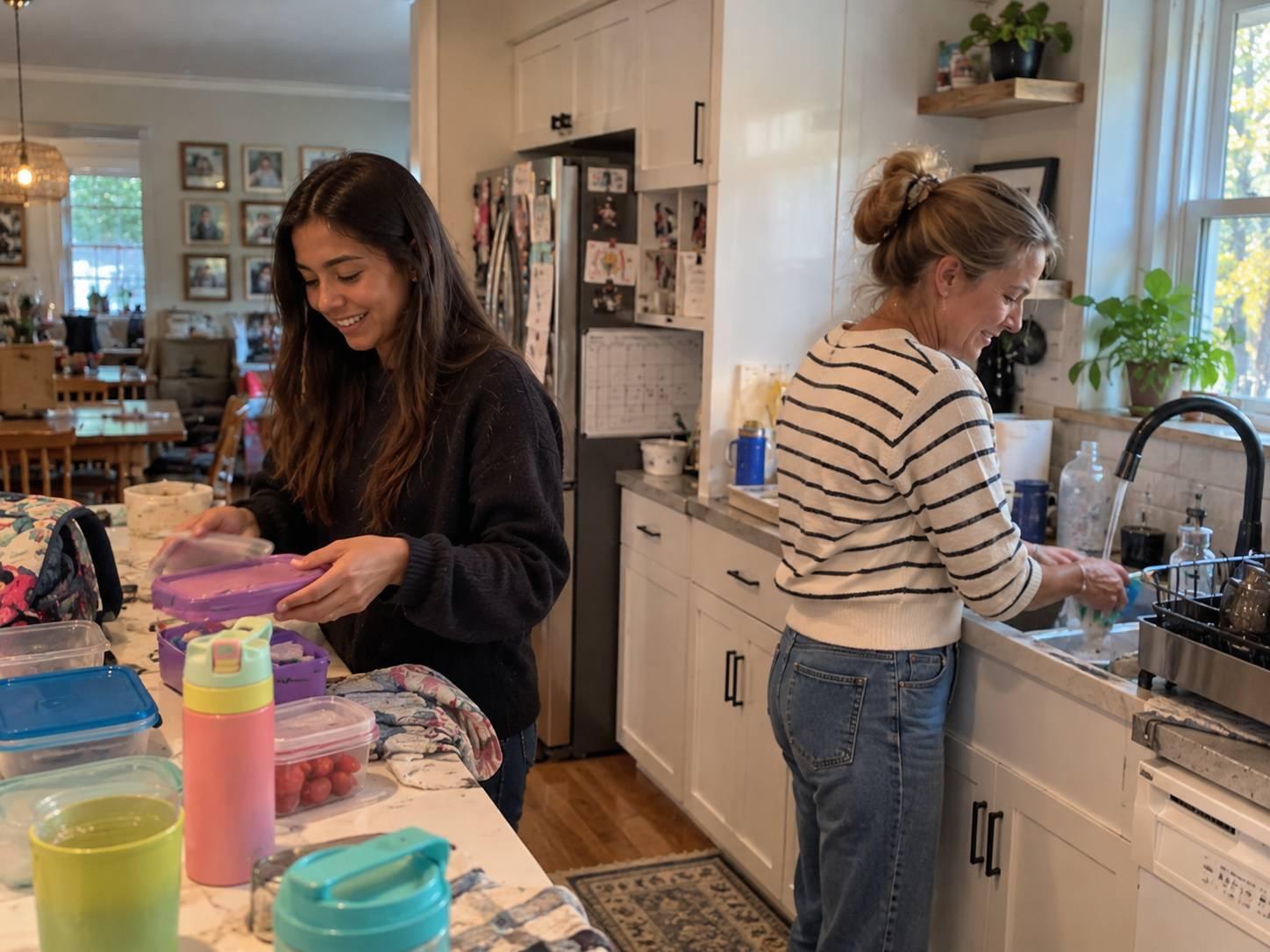
You notice it first in ordinary moments. There is someone else at breakfast. Someone else may be collecting the children from school, opening the fridge, putting a wash on or sitting at the table while dinner is being served.
That can feel slightly strange at the beginning, for both sides. Your family already has its own habits and shortcuts. Your au pair is trying to learn them while also dealing with a new country, language, church, transport system and group of people.
Give it a little time. You do not need to manufacture instant closeness. What matters at the start is that she feels welcome, knows what you expect, and has enough privacy to settle in at her own pace. 🙂
2The help is real, but she is not a housekeeper
An extra pair of hands can change the feel of family life. A parent can finish work while someone else starts tea with the children. One child can get proper attention while another is at an activity. A rushed morning becomes a little less rushed. 🤝
There is an important limit, though. An au pair is there to support you, not to take over the running of the house. If she is choosing between supervising a toddler properly and getting through a list of chores, the toddler wins.
A ten-minute explanation can prevent a week of frustration. Do not assume that a young woman from another country will know how you sort laundry, what goes in which lunchbox, how your cooker works or exactly what you mean by 'tidy the children's room'.
3The first couple of weeks matter
The easiest placements to live with usually have clear expectations from the beginning. Talk through the day rather than relying on assumptions. Show her the school route. Explain screen-time rules. Tell her how you handle snacks, discipline, bedtime and friends coming over. If she will drive, make sure she has time to become comfortable with the car and local roads before she is carrying your children.
A written timetable is useful even in a relaxed household. It answers simple questions such as when she is working, when she is free, who is doing the school run and whether you expect help after dinner.
The timetable does not have to make family life rigid. Its purpose is the opposite: when everyone knows what has been agreed, there is much less need for awkward daily negotiation.
4“Part of the family” does not mean together all the time
Many families want their au pair to feel part of the family, and that is a good instinct. Invite her to eat with you. Include her in birthdays, church, trips and the sort of ordinary outings where it would feel odd to leave her sitting at home.
But give each other room as well. You may want an evening for just you two and the children. She may want to see friends, join a young adults group, travel for the weekend or simply close her bedroom door and watch something on her laptop.
Former au pairs often do come back to visit, keep in touch with the children and are talked about years later as part of the family. Other placements are more formal: everyone gets on well, the children are cared for, and the year ends on a positive note but without a lifelong bond.
Both are perfectly good outcomes. It is better to let the relationship develop honestly than to expect a stranger to feel like a daughter from the first week.


5Your children need to know that she has authority
An au pair can become a wonderful older-sister figure. Children often love having a younger adult around who will play games, do crafts, have long talks or take them to the park.
She is still responsible for them when you are not there. Back her up on the basic rules. If the children discover that they can ignore her and wait for Mum or Dad to overrule her, her roles becomes difficult very quickly.
There is a cultural benefit too. Children may hear another language, try food from another country, learn different traditions and discover that not every family in the world does things exactly as theirs does.
6Remember why she wanted to become an au pair
Most au pairs genuinely love children, but childcare is rarely their only reason for going abroad. They may also want to improve their English, travel, experience another culture, meet people, grow in confidence or spend a gap year doing something very different.
Host families who understand that tend to have an easier time. You don’t need to organise her social calendar, but you can make the country easier to enjoy. Explain local transport. Tell her which places are worth visiting. Introduce her to people her age. Invite her on a family trip when it makes sense.
Consider life outside your home. Friends, church, classes and other au pairs give her somewhere to belong when she is off duty. This matters especially around birthdays, Christmas or the first spell of homesickness.
This also takes pressure off you. A healthy placement does not require the host family to entertain the au pair every weekend.
7Most problems start small
Living together exposes tiny details you might not think about. How tidy is tidy? Is five minutes late actually late? Can food be taken to a bedroom? Who replaces something when it runs out? Is it okay to use a phone at the table, or while the children are playing?
Add differences in language and culture, and misunderstandings are normal. The danger is not usually the first irritation. It is allowing ten small irritations to accumulate without saying anything.
If something needs to change, be specific and say it early. "Please put the children's dishes in the dishwasher after lunch" is much easier to act on than "I need you to be more helpful". The same applies to positive feedback. If she handled a difficult morning well or took initiative with the children, tell her.
Make sure she can raise things with you too. A timetable may feel reasonable on paper but awkward in practice. She may be struggling with one child's behaviour or unsure whether she is allowed to say no to an extra task. It is much easier to solve these things while everyone is still talking.

8Faith is part of the match
Some host parents particularly value having another Christian adult caring for their children: someone comfortable praying with them or reading the Bible.
It is one reason Christian matching is about more than putting two people with the same label together. Families and au pairs may come from different denominations or styles of church. Before matching, it is worth talking about what faith actually looks like in everyday life.
The au pair needs her own community too. She may love your church, or she may connect better with another congregation or a young adults group nearby. Helping her find somewhere to belong can make a significant difference to the year.
9What if the placement is not going well?
A bad week does not necessarily mean a bad match. Children go through difficult patches. Au pairs get homesick. Parents get stressed. 😫
Start by talking plainly about what is happening. If you are working with an agency, involve them before the situation becomes a crisis. An outside conversation can sometimes reveal that the problem is quite practical: unclear hours, different assumptions about chores, too little time off or a childcare issue that needs more support.
Sometimes the answer is a small adjustment. Sometimes the match genuinely is not right and a rematch is better for everybody. Either way, early communication gives you more options than waiting until one side has already decided to leave.
Throughout the placement, Christian Au Pairs remains available to help you with support and finding the right path forward.
An au pair can be a very good fit if you want flexible help with children and you like the idea of welcoming a young person from another country into your home. It works less well if what you really want is a professional housekeeper, complete privacy outside childcare hours, or someone who will immediately know exactly how you parent.
You need a suitable private room, clear expectations and enough patience to teach someone your family's routines. You also need to be comfortable with a little cultural difference and a little unpredictability. You are bringing a real person into your family, not adding another household service.
With the right match, the practical help is only part of what families remember. The children gain another trusted adult. The family gets to know another culture. And sometimes a young woman who arrived as a stranger becomes someone you are still talking to years later.
Ready to find an au pair for your family?
Tell us about your children, your routine, your church life, the help you need and the sort of person who would feel comfortable in your home. That gives us a much better starting point than a list of childcare requirements alone.